We're talking about the brand new Monkees album ...
Their best album ... and first Top 20 Album ... since 1968!
(Actually, I'm even going to go back a year further because I never really cared for the "The Birds, The Bees And The Monkees" LP, which was the beginning of the end of their original chart success ... which was especially disappointing since its predecessor, "Pisces, Aquarius, Capricorn and Jones, Ltd.", is absolutely one of my favorite albums of all time ... and virtually impossible to top.)

The album works because The Monkees went back to the formula that made them an international success the first time ... songs written by some of the best song writers around, played by cracker-jack musicians who know their way around the studio.
It is an absolute delight from start to finish. (OK, the cover's a little cheezy ... and so are the little colorforms-like stickers that come inside ... but hey (hey) what's on the disk is nothing short of incredible.)
The title track kicks off the CD and dates back to 1968. They found the original demo that Harry Nilsson supplied (but The Monkees never recorded). Harry's original vocal was still on the track ... so Micky (a life-long friend of Nilsson) simply added his vocals at key spots throughout (including trading off on some of the verses and singing harmonies together on others) and created the perfect blend of old and new. (Ironically, Michael Nesmith was on the original 1968 session, too, so this quickly became a very unique Monkees track.) Adam Schlesinger (who produced the entire "Good Times!" proceedings and appears on nearly every track ... and is also, apparently, a life-long Monkees fan) added his guitar and all of a sudden everything old is new again. A rollicking track with great vocals.
"You Bring The Summer" was written by Andy Partridge and features another stellar Micky lead vocal ... catchy as hell. Micky, Mike and Peter all perform on this track, which was recorded in February and March of this year ... and it's got "hit single" written all over it.

"She Makes Me Laugh" is the immediately infectious first single, written by Rivers Cuomo of Weezer. Quirky lyrics may cause a few raised eyebrows now and then (and they do take a little getting used to) but the song is just so damn good, you're hooked immediately regardless. This is one of those songs that would be a hit in ANY year it was released. It also features one of Micky's best vocals and a clever cartoon video, making this one a real stand-out.
"Our Own World" is another one that'll quickly get stuck in your head. Once again, Micky takes the lead but Peter and Mike are there, too, to fill in the gaps. Another brand new 2016 track,written by Adam Schlesinger.

"Gotta Give It Time" dates back to 1967 and was written by two of the hottest songwriters at the time, Jeff Barry and Joey Levine. Micky handles the lead and is the only Monkee on this track. (I'm not sure if that means this is his 1967 vocal or if he dressed things up at the new sessions held earlier this year.) Another great track.

"Me And Magdalena" features a beautifully shared vocal by Michael Nesmith and Micky Dolenz. (Both reportedly wanted to sing lead on this track so they decided to do it together instead) ... and it's incredible how nicely their voices blend on this track. (Side note to Dave The Rave: Listen to this one a few more times ... it really grows on you!)
"Whatever's Right" is another track that dates back awhile but apparently never made it into the recording studio. Written by Tommy Boyce and Bobby Hart, the track features Bobby on vocals along with Micky's sister Coco. Micky takes the lead again (he was, after all, one of the greatest vocalists in rock and roll ... and he STILL sounds every bit as good today) and Mike and Peter are there as well.
On first listen, I thought the album ran out of steam at this point ... that's because the first seven tracks are just so incredibly strong that it's almost impossible for the rest of the CD to measure up. A couple of these tracks have since started to grow on me (we'll let you know which ones) but the very best tracks on this cd can be found within the first seven cuts.
Much has been made about the inclusion of "Love To Love" because it features the lead vocal of Davy Jones, who died so unexpectedly a few years ago. However the track is being misrepresented as being a "newly discovered, unreleased gem" written by Neil Diamond and recorded back in 1967. It simply isn't true ... this track has appeared on any number of Monkees CD's dating back to the late '70's (I believe the first time may have been the Australian "40 Timeless Hits" LP), so it is NOT a new track to Monkees aficionados.
Honestly, there are probably better Davy tracks in the can than this one that could have been used to make a stronger impression ... while it has that vintage 1967 Neil Diamond feel to it, it just isn't that good a song. The Monkees went back to this one several times over the years but still never recorded a version deemed releasable ... and I'm not sure this particular take fares any better ... but it was key to include SOMETHING by Davy for this special 50th anniversary package and that's why it's here.
Disappointing to me is the fact that Michael doesn't appear on this track. While it was very publicly noted upfront that Nesmith would have little to do with the new release, he ended up playing and/or singing on eight of the album's thirteen tracks. To NOT be on this one, the ONLY chance for a full-blown Monkees reunion, is just wrong. Unfortunately it all leads back to that underlying feeling that Michael didn't want to have anything to do with The Monkees when Davy was involved. He agreed to the big reunion tour only after Davy had passed away (although, reportedly, talks were already underway for all four Monkees to hit the road together before Davy died so unexpectedly.) I just feel that EVERY effort should have been made to make this a full reunion track ... and they certainly had the resources available to do so.

Sadly, it all gets worse from here ... Peter's "Little Girl" is probably the album's weakest track and he is the only Monkee on it. (Never noted for his lead vocals, this isn't one of his best ... and again, the song just isn't that strong.) Tork says he originally wrote it for Davy to sing way back when, inspired by "I Wanna Be Free", but it never got waxed.
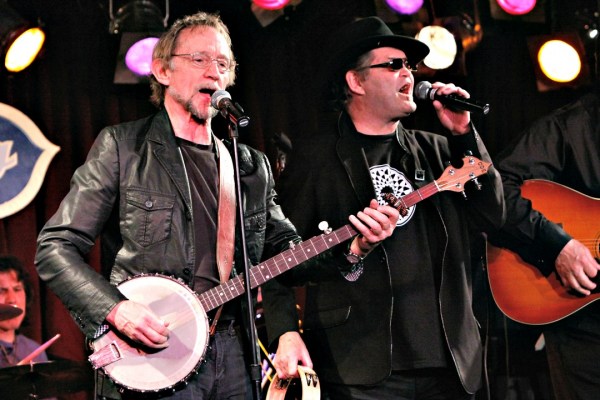
"Birth Of An Accidental Hipster" (written by Noel Gallagher of Oasis) has Mike and Micky sharing vocals again (with a little help from Coco Dolenz). It harkens back to a vintage '60's sound that is sprinkled throughout the album ... little things like filtered and phased vocals, some very nice backwards guitar (especially prevalent on "Our Own World" and "You Bring The Summer", which also features a very cool tempo slowdown at the end.)
"Wasn't Born To Follow" is a Carole King and Gerry Goffin tune first started in 1968, recorded with members of The Wrecking Crew back then and spruced up again earlier this year during the new "Good Times!" sessions. Another Peter Tork vocal (did Peter EVER get two vocals on the same LP before??? I always thought he was delegated to the one "Ringo" track just to keep peace between the ranks!)

The one track that has made the biggest improvement on this CD to my ears is "I Know What I Know", an absolutely beautiful stripped down love song written and sung by Michael Nesmith. At first I couldn't stand it and felt it simply didn't belong on this uptempo album ... but the more I listen to it, the more I like it ... and it's the simple, heartfelt lyrics and understated arrangement (the track features only Nesmith on lead vocal with producer Adam Schlesinger providing all of the other instrumentation, which is sparse at best) that makes the track the powerful standout that it is.
Closing the LP is a song written by Micky Dolenz and Adam Schlesinger called "I Was There (And I'm Told I Had A Good Time)", a staple phrase that Micky has used for decades when describing life in the '60's. It's another fun, bare-bones, simple track that Dolenz himself described as kind of a "Why Don't We Do It In The Road" throw-away that came together very quickly and just happened to click. (It's also the only track that features Micky's drumming on the entire CD ... and at the end, he admits to dropping his sticks!!!)
And there you have it ... a VERY enjoyable CD and listening experience that sounds vintage and contemporary at the same time ... fresh and exciting ... and some of Micky's best vocals ever. It was Amazon's best seller the first weekend it was available and sold enough copies its first week to crack The Top 20 on Billboard's Top 200 Albums Chart.
The Monkees are hot and vital again ... and all of us lifetime fans couldn't be prouder or happier for them. A 50th Anniversary TV Special is also reportedly in the works. Good times indeed! (kk)


